
For Patients
Your procedure instructions
Choose what you are having and you will get the four things worth knowing: what the procedure is, what to do beforehand, what happens on the day, and what recovery looks like.
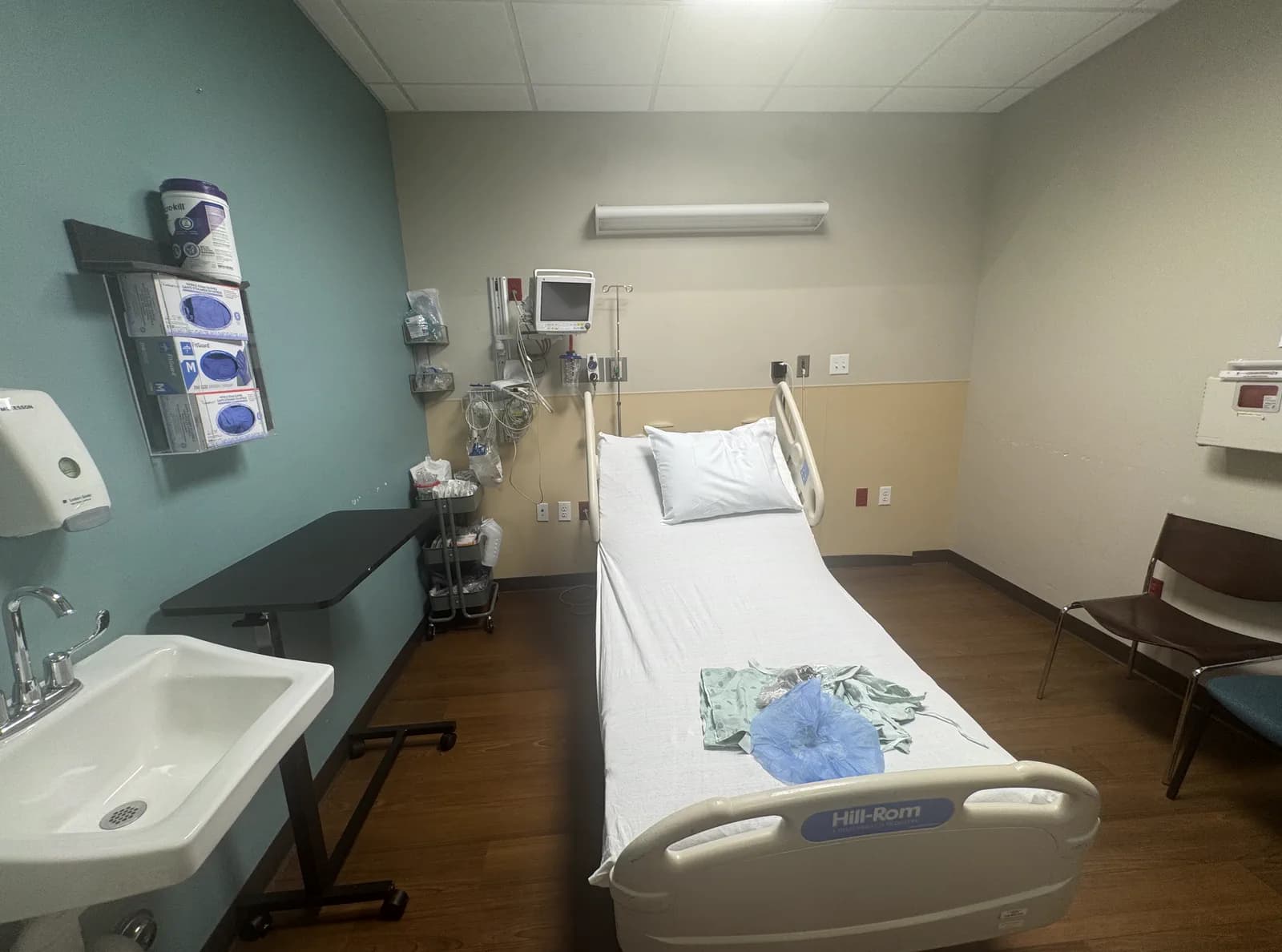
Preparing for a cardiac procedure is not one set of rules. Whether you fast, whether you wash with a medicated soap, whether you need someone to drive you, and which medications to hold all depend on which procedure you are having — and for blood thinners in particular, the instruction for one procedure is the exact opposite of the instruction for another.
So rather than give you everything and leave you to work out which parts are yours, pick your procedure below.
Choose your procedure
Almost nothing about preparing is the same for every procedure — fasting, washing, and which medications to hold all differ, and the instruction for one can be the opposite of the instruction for another. Choose what you are having and you will see only what applies to you.
Choose a procedure above to see how to prepare, what happens on the day, and what recovery looks like.
Atrial fibrillation ablation
Pulmonary vein isolation to stop atrial fibrillation, by pulsed field or radiofrequency energy.
What this procedure is
Atrial fibrillation is a disorganised electrical rhythm in the upper chambers of the heart. In most people it starts from tissue where the pulmonary veins meet the left atrium, which fires off signals that override the heart’s normal pacemaker.
An ablation treats that tissue. Thin catheters are passed from a vein in your groin up to the heart, a three-dimensional map of the chamber is built, and a ring of tissue around the pulmonary veins is treated so those signals can no longer reach the rest of the atrium. Nothing is removed and nothing is implanted — what changes is whether the signal can cross that line.
Before your procedure
- Eating and drinking
- Nothing to eat or drink after midnight, or for at least 8 hours. You can take your medicines with a small sip of water.
- Washing beforehand
- No special washing routine is needed. Shower normally.
- Getting home
- You must have a responsible adult to drive you home. Your ride generally needs to stay at the Center while you are in the procedure room and in recovery.
- How long to plan for
- Plan to be at the Center for 2 to 3 hours.
Your medications
- Antiarrhythmic medicationConfirm with your physician
- If you take an antiarrhythmic such as amiodarone, sotalol, Tikosyn, or flecainide — or a similar medicine — we may instruct you to stop it up to 4 days before. This applies to ablation procedures specifically.
- Anticoagulants — hold for 24 hours before AF ablationConfirm with your physician
- For AF ablation at Heart Health Center, hold your anticoagulant for 24 hours before the procedure. Your electrophysiology team will confirm the exact time of your last dose and when to restart it. If those times are unclear, contact the team before changing your medication schedule. Follow separate instructions from your team for aspirin or Plavix.
What to expect on the day
Arrival and preparation
You check in, change, and a nurse places an IV and attaches monitoring. Your physician and the anaesthesia team go through the plan and answer questions.
Sedation
You are sedated for the procedure. You will not be aware of it and will not remember it.
Access and mapping
Catheters are passed from a vein in the groin up to the heart, and a three-dimensional map of the left atrium is built before any energy is delivered.
The ablation
The tissue around the pulmonary veins is treated to electrically isolate it, and the isolation is then tested to confirm it holds.
Recovery
The access site
Expect tenderness, and possibly a bruise that spreads and changes colour over a week or two. That is normal. Keep the site clean and dry, and follow the instructions you are given about showering and lifting.
The first few weeks
Occasional irregular beats and short runs of atrial fibrillation are common while the tissue heals, and do not mean the procedure failed. The rhythm is judged after this settling period, not during it.
Medications
You may go home on a different schedule than you arrived with, particularly for anticoagulation. Follow the discharge instructions rather than reverting to your old routine.
How your access site was closed
The catheter entry site is closed using the method selected by your physician. Before you leave, your team will explain how it was closed and the care instructions that apply to you. The V-Close removal instructions and video apply only if you were sent home with that device. Follow your team's instructions about when to remove it.
Read access-site care and closure instructionsWhen to call us
Bleeding that does not stop with firm pressure, a rapidly growing lump, a site that becomes hot or red or starts draining, fever, or a limb below the site that turns cold, numb, or pale. Call 911 for chest pain, trouble breathing, fainting, or weakness on one side.
Electrophysiology study
A study that maps the heart's electrical system to find where an abnormal rhythm starts. An ablation often follows in the same session.
What this procedure is
An electrophysiology study is a diagnostic test of the heart’s electrical system. Catheters placed inside the heart record its signals directly, rather than through the skin as an ECG does, which is the only way to see precisely where an abnormal rhythm begins.
The heart is then paced through those catheters to try to reproduce the rhythm you have been having. If it appears, it can be mapped — and if it is one that can be treated, an ablation usually follows in the same session while the catheters are already in place.
Before your procedure
- Eating and drinking
- Nothing to eat or drink after midnight, or for at least 8 hours. You can take your medicines with a small sip of water.
- Washing beforehand
- No special washing routine is needed. Shower normally.
- Getting home
- You must have a responsible adult to drive you home. Your ride generally needs to stay at the Center while you are in the procedure room and in recovery.
- How long to plan for
- Plan to be at the Center for 2 to 3 hours.
Your medications
- Antiarrhythmic medicationConfirm with your physician
- If an ablation is planned as part of your study and you take an antiarrhythmic such as amiodarone, sotalol, Tikosyn, or flecainide, we may instruct you to stop it up to 4 days before. Ask the office whether this applies to you.
- Blood thinnersConfirm with your physician
- If an ablation is planned as part of your study, your anticoagulation is essentially uninterrupted — you hold a single dose rather than stopping for days. On a twice-daily medicine such as Eliquis (apixaban) that means skipping the evening dose before your procedure. For a diagnostic study without an ablation the instruction may differ, so ask the office which applies to you.
What to expect on the day
Access and catheters
Catheters are passed from a vein in the groin to sit at defined points inside the heart, recording its electrical signals directly rather than from the skin.
Provoking the rhythm
The heart is paced through those catheters to try to bring on the rhythm you have been having. This is the point of the study — a rhythm that appears can be mapped and located.
Ablation, if it is indicated
If an arrhythmia is induced and it is one that can be ablated, treatment usually follows immediately while the catheters are already in place. This is discussed and consented in advance.
Recovery
The access site
Expect tenderness, and possibly a bruise that spreads and changes colour over a week or two. That is normal. Keep the site clean and dry, and follow the instructions you are given about showering and lifting.
Results
What was found is explained to you and to whoever is taking you home, and the full report goes to your referring physician.
How your access site was closed
The catheter entry site is closed using the method selected by your physician. Before you leave, your team will explain how it was closed and the care instructions that apply to you. The V-Close removal instructions and video apply only if you were sent home with that device. Follow your team's instructions about when to remove it.
Read access-site care and closure instructionsWhen to call us
Bleeding that does not stop with firm pressure, a rapidly growing lump, a site that becomes hot or red or starts draining, fever, or a limb below the site that turns cold, numb, or pale. Call 911 for chest pain, trouble breathing, fainting, or weakness on one side.
Pacemaker, defibrillator, CRT, or CCM device
Implant of a pacemaker, ICD, or a resynchronisation or contractility device. Loop recorders are listed separately — they are prepared for differently.
What this procedure is
These devices are placed under the skin below the collarbone, with one or more thin leads running through a vein into the heart.
A pacemaker treats a heart that beats too slowly. A defibrillator watches for a dangerous fast rhythm and can stop it. A resynchronisation device coordinates the two sides of a weakened heart so they pump together, and a contractility modulation device strengthens how it squeezes. They are implanted in much the same way and followed in much the same way afterwards.
All of them go in under sterile conditions, which is why the washing routine below matters more here than for anything else on this list.
Before your procedure
- Eating and drinking
- Nothing to eat or drink after midnight, or for at least 8 hours. You can take your medicines with a small sip of water.
- Washing beforehand
- Take two showers with a medicated soap such as Hibiclens — one the night before and one on the day. If you have been told to shave the site, do it carefully.
- Getting home
- You must have a responsible adult to drive you home. Your ride generally needs to stay at the Center while you are in the procedure room and in recovery.
- How long to plan for
- Plan to be at the Center for 2 to 3 hours.
Your medications
- Metformin
- Do not take your metformin on the morning of the procedure, or for 48 hours afterward.
- Blood thinnersConfirm with your physician
- Stop your blood thinners for at least 24 hours. If you take Eliquis, Pradaxa, or Xarelto, stop 24 hours before. If you take warfarin or Coumadin, you may continue the medicine but do not take it on the day of your procedure. You are generally not required to stop aspirin or Plavix.
What to expect on the day
Preparation of the site
The skin below the collarbone is cleaned and numbed with local anaesthetic, and you are sedated. Infection prevention is taken seriously here, which is why the showers beforehand matter.
Leads, then the device
The leads are passed through a vein to the heart and their position and electrical measurements are checked, then the device is connected and placed in a small pocket under the skin.
Testing before you leave the room
The device is programmed and tested before the pocket is closed.
Recovery
The arm on that side
Keep it below shoulder height until you are told otherwise. The leads need time to settle, and lifting the arm over your head too early is the main way that goes wrong.
The wound
Keep it clean and dry, and follow the instructions you are given about showering. Call us for redness, swelling, drainage, or fever — a device pocket is one place an infection must never be left to see how it goes.
Device checks
Your device is checked in clinic and usually remotely from home, which is how battery status, lead performance, and recorded rhythms are followed over time.
When to call us
Bleeding that does not stop with firm pressure, a rapidly growing lump, a site that becomes hot or red or starts draining, fever, or a limb below the site that turns cold, numb, or pale. Call 911 for chest pain, trouble breathing, fainting, or weakness on one side.
Implantable loop recorder
A small monitor placed just under the skin that records your heart rhythm continuously for up to several years.
What this procedure is
An implantable loop recorder is about the size of a stick of chewing gum and sits just under the skin on the left side of the chest. It has no leads and does not touch the heart.
It treats nothing. It records continuously, so that something happening too rarely to catch on a 24-hour monitor — an unexplained faint, a palpitation, atrial fibrillation you cannot feel — is captured when it finally happens rather than missed.
Before your procedure
This can be done with or without IV sedation, and it is your choice. Most patients have it under local anaesthetic alone, eat normally beforehand, and drive themselves home. If you would prefer sedation, you will need to fast and to arrange for someone to drive you.
- Eating and drinking
- Only if you choose sedation. Without it, eat and drink normally. With it, nothing to eat or drink after midnight, or for at least 8 hours.
- Washing beforehand
- Take two showers with a medicated soap such as Hibiclens — one the night before and one on the day. If you have been told to shave the site, do it carefully.
- Getting home
- Only if you choose sedation. Without it you can drive yourself home; with it you must have someone drive you.
- How long to plan for
- Plan to be at the Center for about an hour.
Your medications
- Keep taking everything, blood thinners included
- Do not stop any of your medications for this procedure. That includes anticoagulants such as Eliquis, Pradaxa, Xarelto, warfarin or Coumadin, and it includes aspirin and Plavix. Take them exactly as you normally would.
What to expect on the day
Numbing the skin
The skin over the left side of the chest is cleaned and numbed with local anaesthetic. If you have chosen sedation, it is given now.
The insertion
A cut under a centimetre long is made and the recorder is slid into place just beneath the skin. This part usually takes only a few minutes.
Closing and pairing
The incision is closed, generally with a single stitch or adhesive strips, and the device is checked and paired with your monitor before you go.
Recovery
The incision
Small, but still a wound. Keep it clean and dry and follow the instructions you are given about showering. Call us for redness, swelling, drainage, increasing pain, or fever.
The monitor at home
You go home with a transmitter that sends recordings to us automatically. Set it up where you sleep, and leave it plugged in — the recorder can only help if what it captures reaches us.
If you have a symptom
You are usually given a way to mark the moment something happens, which flags that stretch of recording for review. Use it. A marked episode is far easier to interpret than one found by chance.
When to call 911
Chest pain, trouble breathing, fainting, or weakness on one side. The recorder does not call anyone for you — it records, and someone reviews it afterwards.
Coronary angiogram or stent
Angiography of the coronary arteries — a left heart catheterisation — with or without a stent.
What this procedure is
A coronary angiogram is an X-ray picture of the arteries that supply the heart muscle. A thin catheter is guided to where those arteries begin and contrast dye is injected, so any narrowing shows up clearly and can be measured rather than estimated.
If a narrowing is causing your symptoms, it can often be treated in the same session — a balloon opens it and a stent holds it open. Whether that happens is decided from the pictures and your symptoms together, with you awake enough to be part of the conversation.
Before your procedure
- Eating and drinking
- Nothing to eat or drink after midnight, or for at least 8 hours. You can take your medicines with a small sip of water.
- Washing beforehand
- No special washing routine is needed. Shower normally.
- Getting home
- You must have a responsible adult to drive you home. Your ride generally needs to stay at the Center while you are in the procedure room and in recovery.
- How long to plan for
- Plan to be at the Center for 2 to 3 hours.
Your medications
- Blood thinnersConfirm with your physician
- For this procedure you may be instructed to stop your blood thinners for up to 5 days — longer than the usual 24 hours. Verify the timing with your physician or their medical assistant; do not assume the general rule applies to you.
- Metformin
- Do not take your metformin on the morning of the procedure, or for 48 hours afterward.
What to expect on the day
Access
An artery at the wrist or the groin is numbed and accessed. A thin catheter is guided to the origin of the coronary arteries.
The pictures
Contrast is injected and X-ray images show where the arteries are narrowed and by how much.
A decision, with you in it
Your physician reviews the images while you are on the table. If nothing needs treating, the procedure ends there. If a narrowing should be stented, that is discussed with you — sedation is kept light enough for you to take part in that conversation.
Recovery
The access site
Expect tenderness, and possibly a bruise that spreads and changes colour over a week or two. That is normal. Keep the site clean and dry, and follow the instructions you are given about showering and lifting.
If you had a stent
You will go home on antiplatelet medication, and taking it exactly as prescribed matters more than almost anything else you do. Stopping it early is the main cause of a stent closing.
How your access site was closed
The catheter entry site is closed using the method selected by your physician. Before you leave, your team will explain how it was closed and the care instructions that apply to you. The V-Close removal instructions and video apply only if you were sent home with that device. Follow your team's instructions about when to remove it.
Read access-site care and closure instructionsWhen to call us
Bleeding that does not stop with firm pressure, a rapidly growing lump, a site that becomes hot or red or starts draining, fever, or a limb below the site that turns cold, numb, or pale. Call 911 for chest pain, trouble breathing, fainting, or weakness on one side.
Peripheral or vascular procedure
Angiography and treatment of arteries outside the heart, most often in the legs.
What this procedure is
A peripheral angiogram is the same technique applied to arteries outside the heart, most often those supplying the legs. Narrowed leg arteries cause pain on walking that eases with rest, and in more advanced disease, wounds that will not heal.
As with the coronary arteries, a narrowing that is causing symptoms can usually be treated during the same procedure with a balloon and, where needed, a stent.
Before your procedure
- Eating and drinking
- Nothing to eat or drink after midnight, or for at least 8 hours. You can take your medicines with a small sip of water.
- Washing beforehand
- No special washing routine is needed. Shower normally.
- Getting home
- You must have a responsible adult to drive you home. Your ride generally needs to stay at the Center while you are in the procedure room and in recovery.
- How long to plan for
- Plan to be at the Center for 2 to 3 hours.
Your medications
- Blood thinnersConfirm with your physician
- For this procedure you may be instructed to stop your blood thinners for up to 5 days — longer than the usual 24 hours. Verify the timing with your physician or their medical assistant; do not assume the general rule applies to you.
What to expect on the day
Access and imaging
An artery is accessed under local anaesthetic and contrast is injected so the narrowed segment can be seen on X-ray.
Treatment where it is warranted
A narrowing causing symptoms may be opened with a balloon and held open with a stent. What is treated is decided from the images and from your symptoms together.
Recovery
The access site
Expect tenderness, and possibly a bruise that spreads and changes colour over a week or two. That is normal. Keep the site clean and dry, and follow the instructions you are given about showering and lifting.
Walking
Walking is usually encouraged once the access site is settled — it is part of the treatment for claudication, not a risk to it. Follow the specific limits you are given.
How your access site was closed
The catheter entry site is closed using the method selected by your physician. Before you leave, your team will explain how it was closed and the care instructions that apply to you. The V-Close removal instructions and video apply only if you were sent home with that device. Follow your team's instructions about when to remove it.
Read access-site care and closure instructionsWhen to call us
Bleeding that does not stop with firm pressure, a rapidly growing lump, a site that becomes hot or red or starts draining, fever, or a limb below the site that turns cold, numb, or pale. Call 911 for chest pain, trouble breathing, fainting, or weakness on one side.
TEE or cardioversion
A transoesophageal echocardiogram, an electrical cardioversion, or the two together.
What this procedure is
A cardioversion resets an abnormal heart rhythm with a brief, synchronised electrical shock delivered through pads on the chest. You are asleep for it and will not feel it.
Before that can be done safely we need to know there is no clot sitting in the left atrial appendage, because resetting the rhythm could dislodge one and cause a stroke. A transoesophageal echocardiogram answers that question: the ultrasound probe passes into the oesophagus, which sits directly behind the heart, giving a view a scan through the chest wall cannot reliably provide.
Before your procedure
- Eating and drinking
- Nothing to eat or drink after midnight, or for at least 8 hours. You can take your medicines with a small sip of water.
- Washing beforehand
- No special washing routine is needed. Shower normally.
- Getting home
- You must have a responsible adult to drive you home. Your ride generally needs to stay at the Center while you are in the procedure room and in recovery.
- How long to plan for
- Plan to be at the Center for 2 to 3 hours.
Your medications
- Blood thinners — do not stop
- If you are having a TEE and/or a cardioversion, do NOT stop your blood thinners. This is the opposite of the instruction for most other procedures, and it matters: stopping them raises the risk of a stroke around a cardioversion.
What to expect on the day
The TEE
Under sedation, a probe is passed into the oesophagus, which sits directly behind the heart. From there the left atrial appendage can be seen clearly enough to say whether a clot is present — which a scan from the chest wall cannot reliably do.
The cardioversion
If no clot is seen, a synchronised electrical shock is delivered through pads on the chest to reset the rhythm. You are asleep for it and will not feel it.
Recovery
Your throat
A sore throat for a day or so after a TEE is common. Eating and drinking resume once the numbing has fully worn off — you will be told when.
Anticoagulation continues
Keep taking your blood thinner exactly as prescribed after the procedure. The stroke risk around a cardioversion extends well past the day itself.
When to call us
Bleeding that does not stop with firm pressure, a rapidly growing lump, a site that becomes hot or red or starts draining, fever, or a limb below the site that turns cold, numb, or pale. Call 911 for chest pain, trouble breathing, fainting, or weakness on one side.
PFO or ASD closure
Catheter closure of a hole between the upper chambers of the heart.
What this procedure is
A patent foramen ovale and an atrial septal defect are both openings between the two upper chambers of the heart, but they are not the same thing. A PFO is a flap that never sealed after birth and is present in about one adult in four. An ASD is a true hole in the wall between the chambers.
Both can be closed with a device delivered through a vein in the groin rather than by surgery. The device is opened across the opening, checked in position, and released. Over the following months the body’s own lining grows over it.
The closure is guided by a transoesophageal echocardiogram, done under sedation at the same sitting. That is the reason this procedure has a fasting requirement.
Before your procedure
- Eating and drinking
- Nothing to eat or drink after midnight, or for at least 8 hours. You can take your medicines with a small sip of water.
- Washing beforehand
- No special washing routine is needed. Shower normally.
- Getting home
- You must have a responsible adult to drive you home. Your ride generally needs to stay at the Center while you are in the procedure room and in recovery.
- How long to plan for
- Plan to be at the Center for 2 to 3 hours.
Your medications
- Blood thinners — keep taking them, except that morningConfirm with your physician
- Your anticoagulation continues for a septal closure. You will not be asked to stop it in the days beforehand — but do not take it on the morning of your procedure. It is given to you here afterwards, so bring it with you or tell us what you take.
What to expect on the day
Imaging throughout
The closure is guided by a transoesophageal echocardiogram as well as X-ray, so the defect and the device can be seen clearly while the device is positioned. That echo is done under sedation with a probe passed into the oesophagus — which is why you must not eat or drink beforehand.
Placing the device
The closure device is delivered through a vein in the groin, opened across the defect, and checked in position before it is released.
Recovery
The access site
Expect tenderness, and possibly a bruise that spreads and changes colour over a week or two. That is normal. Keep the site clean and dry, and follow the instructions you are given about showering and lifting.
Afterwards
You will be given specific instructions about antiplatelet medication and about antibiotic cover for dental work while the device endothelialises. Follow them — the timeframes are not arbitrary.
How your access site was closed
The catheter entry site is closed using the method selected by your physician. Before you leave, your team will explain how it was closed and the care instructions that apply to you. The V-Close removal instructions and video apply only if you were sent home with that device. Follow your team's instructions about when to remove it.
Read access-site care and closure instructionsWhen to call us
Bleeding that does not stop with firm pressure, a rapidly growing lump, a site that becomes hot or red or starts draining, fever, or a limb below the site that turns cold, numb, or pale. Call 911 for chest pain, trouble breathing, fainting, or weakness on one side.
Right heart catheterisation, including exercise study
Direct measurement of the pressures inside the right heart and lungs, at rest and — where indicated — during exercise.
What this procedure is
A right heart catheterisation measures the pressures inside the right side of the heart and the lungs directly, with a catheter, rather than estimating them from an ultrasound. It is the test that settles questions an echocardiogram can only raise.
In an exercise study the measurements are repeated while you pedal against increasing resistance with the catheter still in place. Several conditions — heart failure with preserved ejection fraction in particular — look normal at rest and only reveal themselves under load, which is exactly when your symptoms happen.
Before your procedure
This can be done with or without IV sedation, and it is your choice. With local anaesthetic only, you can eat and drink normally beforehand and drive yourself home. If you would rather have sedation, you will need to fast and to arrange for someone to drive you. Most exercise studies are done without sedation, because the study depends on you being able to exercise.
- Eating and drinking
- Only if you choose sedation. Without it, eat and drink normally. With it, nothing to eat or drink after midnight, or for at least 8 hours.
- Washing beforehand
- No special washing routine is needed. Shower normally.
- Getting home
- Only if you choose sedation. Without it you can drive yourself home; with it you must have someone drive you.
- How long to plan for
- Plan to be at the Center for 1 to 3 hours — an exercise study can be as short as an hour.
Your medications
- DiureticsConfirm with your physician
- Your diuretic dose may be adjusted beforehand. A large dose on the morning of the study alters the very pressures the study is trying to measure. Ask the office what to do with yours.
What to expect on the day
Access under local anaesthetic
A vein at the neck, arm, or groin is numbed and accessed. If your study includes exercise you stay awake for it, because the measurements depend on you being able to pedal.
Resting measurements
The catheter is advanced through the right heart, recording pressures at each step. These are the baseline numbers everything else is compared against.
The exercise, if your study includes it
You pedal against increasing resistance on a cycle ergometer at the table while pressures are recorded continuously. You will be asked to keep going until you reach the symptom that brought you here — which is uncomfortable, and is the point.
Recovery
The access site
The catheter is removed and the site is held until it seals. Expect some tenderness. Most patients go home the same day.
Results
The measurements are interpreted together rather than read off one at a time, so they are usually discussed at follow-up rather than in the recovery bay.
How your access site was closed
The catheter entry site is closed using the method selected by your physician. Before you leave, your team will explain how it was closed and the care instructions that apply to you. The V-Close removal instructions and video apply only if you were sent home with that device. Follow your team's instructions about when to remove it.
Read access-site care and closure instructionsWhen to call us
Bleeding that does not stop with firm pressure, a rapidly growing lump, a site that becomes hot or red or starts draining, fever, or a limb below the site that turns cold, numb, or pale. Call 911 for chest pain, trouble breathing, fainting, or weakness on one side.
Vein or venous treatment
Treatment of varicose and incompetent veins, including venous ablation.
What this procedure is
Veins in the legs carry blood back to the heart against gravity, and one-way valves stop it falling back down. When those valves fail, blood pools — causing varicose veins, aching, swelling, skin changes, and in time ulcers that heal slowly.
Treatment closes the faulty vein so blood reroutes through healthy ones. The vein is sealed from the inside under local anaesthetic with ultrasound guidance, and the body absorbs it over the following weeks. Circulation improves, because the vein being closed was not carrying blood in the right direction to begin with.
Before your procedure
This can be done with or without IV sedation. Most patients have local anaesthetic only, eat normally beforehand, and drive themselves home. If you would prefer sedation, you will need to fast and to arrange for someone to drive you.
- Eating and drinking
- Only if you choose sedation. Without it, eat and drink normally. With it, nothing to eat or drink after midnight, or for at least 8 hours.
- Washing beforehand
- No special washing routine is needed. Shower normally.
- Getting home
- Only if you choose sedation. Without it you can drive yourself home; with it you must have someone drive you.
- How long to plan for
- Plan to be at the Center for 2 to 3 hours.
Your medications
- Keep taking everything, blood thinners included
- Do not stop any of your medications for this procedure. That includes anticoagulants such as Eliquis, Pradaxa, Xarelto, warfarin or Coumadin, and it includes aspirin and Plavix. Take them exactly as you normally would.
What to expect on the day
Local anaesthetic only
The vein is treated under local anaesthetic with ultrasound guidance. You are awake throughout and can eat and drink normally beforehand.
Closing the vein
The faulty vein is sealed so that blood reroutes through healthy veins. The treated vein is absorbed by the body over the following weeks.
Recovery
Walking, straight away
You are usually encouraged to walk immediately and to keep moving over the following days. Prolonged sitting or standing still is what to avoid.
Compression stockings
You will likely be asked to wear compression for a period afterward. How long depends on what was treated — follow the instructions you are given.
When to call us
Bleeding that does not stop with firm pressure, a rapidly growing lump, a site that becomes hot or red or starts draining, fever, or a limb below the site that turns cold, numb, or pale. Call 911 for chest pain, trouble breathing, fainting, or weakness on one side.
Something else, or I am not sure
The instructions below apply to everyone. For anything about your medications, fasting, or whether you need a driver, please call us — we would far rather answer the question than have you guess.
Before your procedure
- Eating and drinkingWe will confirm
- The nurse will confirm this when they call you.
- Washing beforehandWe will confirm
- The nurse will confirm this when they call you.
- Getting homeWe will confirm
- The nurse will confirm this when they call you.
- How long to plan forWe will confirm
- The nurse will confirm this when they call you.
Your medications
We do not publish general medication instructions for this one, because they depend on the procedure and on what you take. Please call us on (602) 456-2342, ext. 3000 and we will go through your medications with you.
The instructions to stop blood thinners vary from case to case. Please ask your physician or nurse about the blood thinner directions that apply to you — what they tell you comes first, always.
These apply whatever you are having
- You will hear from us first
- A nurse calls ahead of your procedure to confirm your arrival time, go through your history, and review every medication you take. If anything below is unclear, that call is where to raise it.
- What to bring
- Your photo ID, your insurance card, and an up-to-date list of your medications with doses and how often you take them. You may bring the medications themselves, such as inhalers or blood thinners. Leave valuables at home or with whoever comes with you.
- Arrive 30 minutes early
- At 1848 E. Thomas Road, Suite 200 — upstairs.
- Your start time may move
- Unless you are the first case of the day, your procedure may begin earlier or later than scheduled, sometimes by an hour or two, depending on how the ones before yours have gone. That is deliberate rather than a scheduling failure: every procedure here is given the time it actually needs, and if one runs long it is because someone is receiving the care they came for. Yours will be treated the same way. We will keep you and whoever is with you updated as the day goes.
- Tell us if anything changes
- If you develop a fever, an infection, chest pain, or any new symptom in the days beforehand, call us. It may change nothing, but we need to know.
Do not stop or change any medication on your own. If anything here is unclear, call us on (602) 456-2342, ext. 3000 — it is the right call to make, every time.
If you need to reschedule
Your appointment time is reserved specifically for you, and it can take weeks to schedule a procedure given the limited time available in the Center. If you need to reschedule, please give us at least 72 hours so another patient can use the slot. If your insurance changes before your procedure, call your physician's office or call us, so we can make sure the new plan covers it.
More about each procedure
The instructions above are the short version. Each procedure has a full page explaining why it is done, what the evidence says, and what the risks are.
Atrial fibrillation ablation
Pulmonary vein isolation to stop atrial fibrillation, by pulsed field or radiofrequency energy.
Electrophysiology study
A study that maps the heart's electrical system to find where an abnormal rhythm starts. An ablation often follows in the same session.
Pacemaker, defibrillator, CRT, or CCM device
Implant of a pacemaker, ICD, or a resynchronisation or contractility device. Loop recorders are listed separately — they are prepared for differently.
Implantable loop recorder
A small monitor placed just under the skin that records your heart rhythm continuously for up to several years.
Coronary angiogram or stent
Angiography of the coronary arteries — a left heart catheterisation — with or without a stent.
Peripheral or vascular procedure
Angiography and treatment of arteries outside the heart, most often in the legs.
TEE or cardioversion
A transoesophageal echocardiogram, an electrical cardioversion, or the two together.
PFO or ASD closure
Catheter closure of a hole between the upper chambers of the heart.
Right heart catheterisation, including exercise study
Direct measurement of the pressures inside the right heart and lungs, at rest and — where indicated — during exercise.
Vein or venous treatment
Treatment of varicose and incompetent veins, including venous ablation.
Questions about your procedure?
Our team will confirm your date, walk you through preparation, and answer questions about insurance, sedation, and recovery.